Summer on the Mornington Peninsula is beautiful, but hot days can be genuinely dangerous for dogs. Here’s how to keep your dog safe while still enjoying the season.
Why heat is a risk
Dogs can’t sweat the way we do. They cool themselves mainly by panting, which becomes much less effective on hot, humid days. Flat-faced breeds, older dogs, overweight dogs, puppies, dogs with thick coats and very active dogs are especially at risk.
Signs of heat stress
- Heavy, rapid panting.
- Drooling, or a bright red tongue and gums.
- Weakness, wobbliness or lying down and refusing to move.
- Vomiting or diarrhoea.
- Confusion or collapse.
Heatstroke is an emergency. Move your dog into the shade, cool them with cool (not icy) water, and get to a vet straight away.
Hot-weather habits
Go early
Exercise in the early morning when it’s coolest. Evenings can still hold a lot of heat in sand and pavement.
Check the ground
Dry sand, asphalt and boardwalks can burn paws. Press the back of your hand to the surface for a few seconds. If it’s too hot for you, it’s too hot for your dog.
Water, water, water
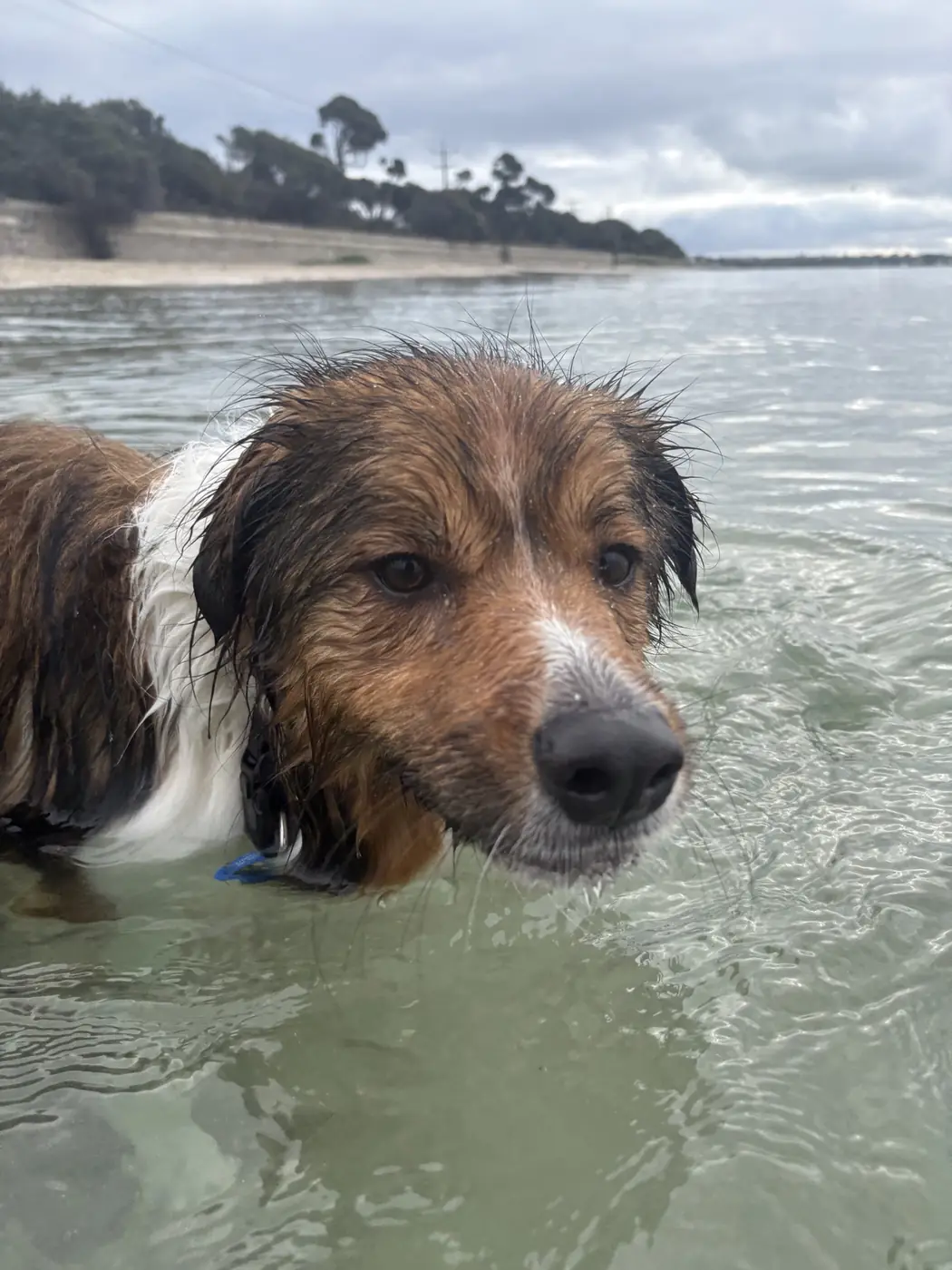
Carry fresh water and offer it often. Shallow, calm water can help dogs cool down, but supervise closely and avoid strenuous swimming on very hot days.
Dial it down
Swap long runs for sniff walks, shade and enrichment games. Mental work is tiring too, and generates far less heat.
Never leave dogs in cars
Even with the windows down, a parked car can heat up dangerously fast.
Our approach
Dog welfare comes first. We may modify, shorten, relocate or postpone adventures in extreme heat, and if we cancel before a service begins, you can choose a full refund or reschedule. See our terms for details, or read about our adventures.