If you’ve ever been dragged towards a fence post or a patch of grass, you know how much dogs love to sniff. Rather than seeing it as a distraction, it helps to understand it as one of your dog’s most important needs.
A dog’s world is made of smell
Dogs experience the world through their noses far more than we do. A single patch of bush can tell them which animals have passed, which dogs have been there and how recently. For a dog, sniffing is reading the news.
Why sniffing is so satisfying
- It’s mentally tiring: processing scent takes a lot of brain power. A slow, sniffy walk can leave dogs more settled than a fast one.
- It can help dogs calm down: sniffing is a slower, more deliberate activity, and many dogs relax as they do it.
- It builds confidence: investigating new places at their own pace helps nervous dogs learn the world is manageable.
- It’s a choice: following a scent is the dog deciding what matters, which is good for their wellbeing.
Why we love the bush for it
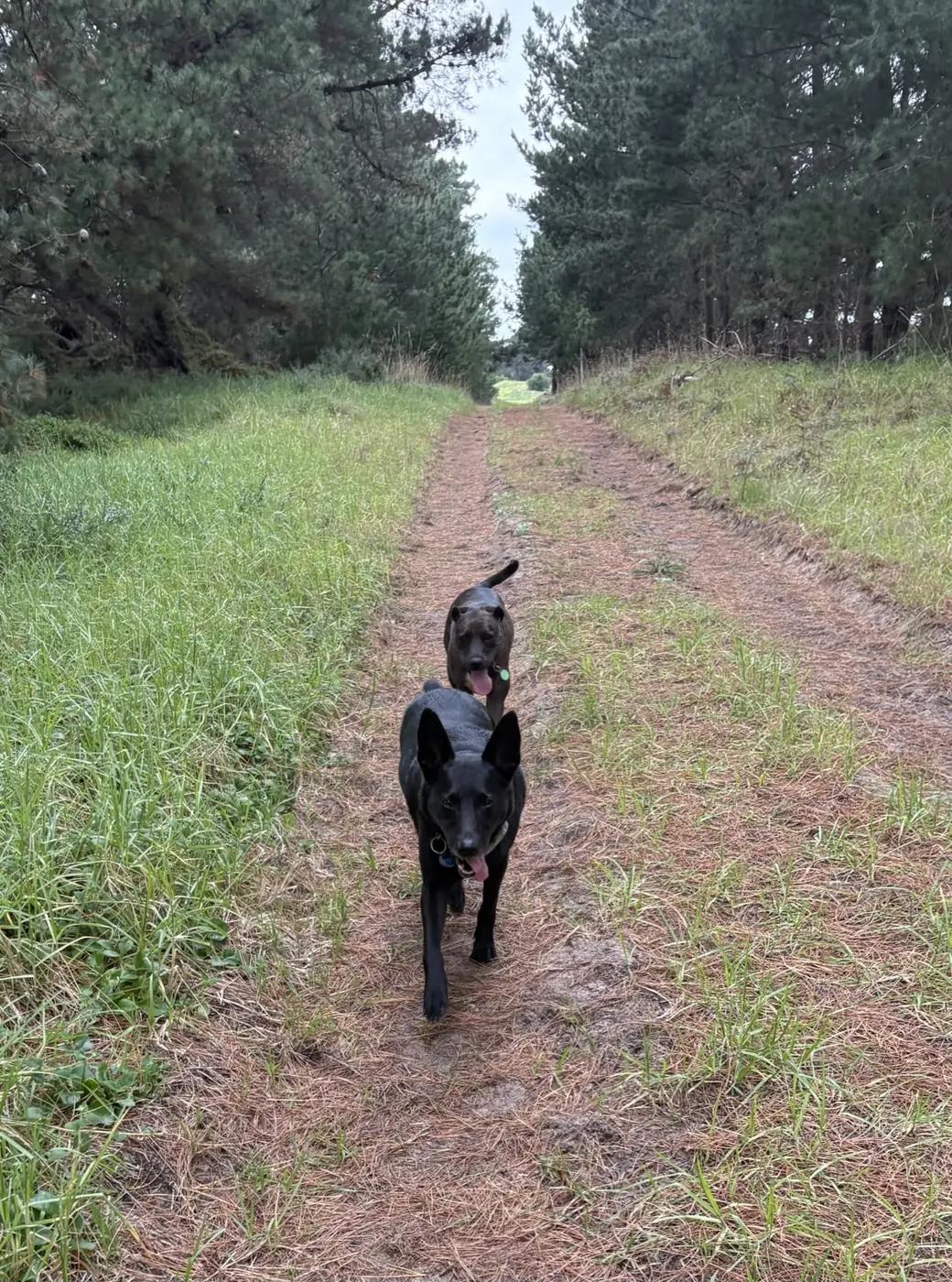
Bushland is a scent playground. Leaf litter, logs, wildlife trails and changing terrain give dogs far more to process than a footpath. That’s why scent work and exploration are at the heart of our bush adventures.
Easy scent games to try at home
Find it
Ask your dog to wait, place a treat a short distance away where they can see it, then say “find it”. Gradually hide treats in harder spots.
Scatter feeding
Scatter part of your dog’s meal across the lawn instead of using a bowl. It turns dinner into a search.
Sniff walks
Once or twice a week, let your dog choose the pace and direction (safely, on a long lead if needed). Measure the walk in smells, not kilometres.
A note for reactive or anxious dogs
Scent work can be especially useful for dogs who find the world overwhelming. It gives them something positive to focus on. If your dog struggles on walks, our behaviour modification sessions often use sniffing and calm exploration as a foundation.